
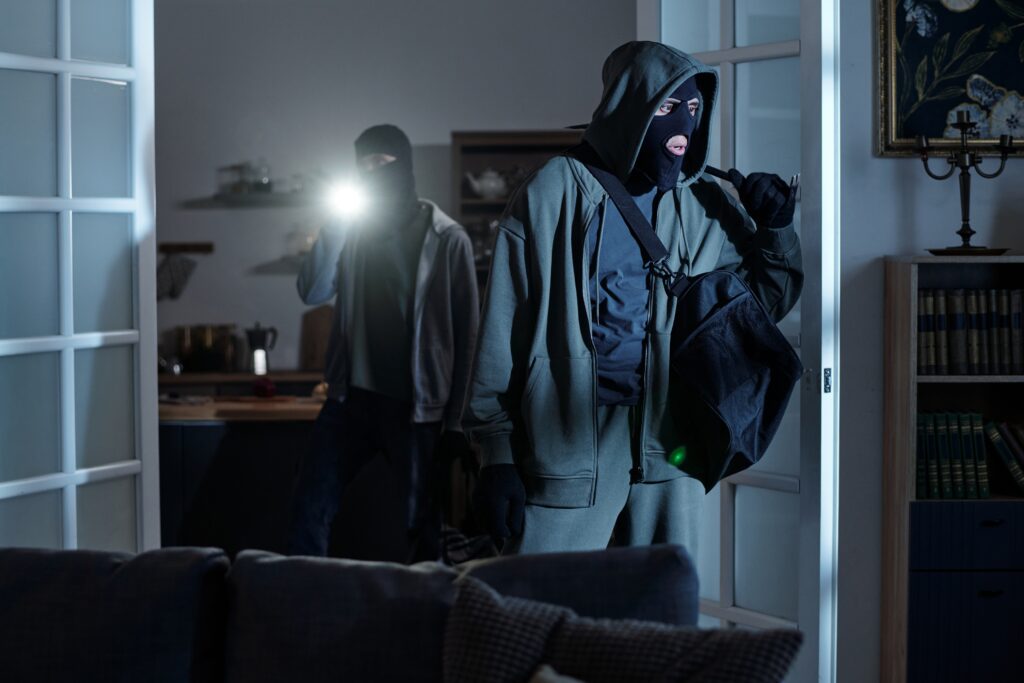
A property owner is not automatically liable simply because an assault, shooting, robbery, sexual assault, or other violent crime occurred on the property. A Maryland negligent security claim generally depends on whether the owner or another responsible party had a duty relating to the area, had control over the relevant property conditions, could reasonably foresee the danger, failed to take reasonable security measures, and whether that failure contributed to the harm.
The criminal offender’s conduct and a civil premises liability claim are separate issues. A criminal case focuses primarily on the person accused of committing the crime, while a negligent security case may examine whether a landlord, business, hotel, apartment complex, or other property operator failed to address a foreseeable security risk.
Because security conditions, surveillance footage, and witness memories can change quickly, an early investigation can be important. The attorneys handling Maryland negligent security claims can investigate what happened and evaluate whether the circumstances support a civil claim.
Start With Duty, Foreseeability, And Control Of The Property
Negligent security cases are highly dependent on the facts. One of the first questions is what duty the property owner or manager owed under the circumstances.
The analysis may consider why the injured person was on the property, where the attack occurred, who controlled that area, what security concerns were known, and what steps could reasonably have been taken before the incident.
For example, an apartment complex may have control over common-area lighting, exterior doors, gates, and access systems. A hotel may control hallway cameras, room-access systems, parking areas, staffing, and security procedures. A retail business may have different responsibilities depending on its location, operating hours, history of incidents, and physical layout.
Experienced Maryland premises liability lawyers can examine these details when evaluating whether a property owner’s actions or omissions may have contributed to an attack.
Prior Incidents And Notice Can Shape Foreseeability
Foreseeability is often a central issue in a negligent security claim. The question is not whether the property owner could predict the exact crime that eventually occurred, but whether available information suggested a meaningful risk requiring reasonable attention.
Relevant evidence may include:
- Prior police calls to the property
- Incident reports
- Complaints from tenants, customers, or guests
- Previous assaults or robberies
- Threats or disturbances
- Trespassing problems
- Reports of unauthorized people entering the property
- Repeated problems with doors, locks, gates, or lighting
Prior incidents can help show what a property owner knew about conditions at the location. They do not necessarily need to be identical to the later crime for the surrounding security history to matter.
Maryland courts have considered premises security duties and foreseeability in published decisions, including this Maryland appellate opinion on premises security duties and a later Maryland Appellate Court negligent-security opinion.
Security Measures Must Be Evaluated In Context
There is no single security measure that every property must have. Whether security was reasonable depends on the property, its operations, and the risks that were known or reasonably apparent.
Potential security measures may include working locks, entry gates, adequate lighting, surveillance cameras, security personnel, access-control systems, written policies, staffing practices, and prompt repairs.
For example, a broken gate may be significant if management knew it was repeatedly allowing unauthorized people to enter an apartment complex. Poor lighting may matter if a parking area had a history of security concerns and the lack of visibility contributed to the circumstances of an attack.
A negligent security claim does not require proving that a particular measure would have guaranteed prevention. The issue is whether the property owner acted reasonably in light of the circumstances.
The Property Owner’s Control Matters
Property owners cannot control every action of another person. A violent criminal act may occur even where reasonable precautions are in place.
That is why control is an important part of the analysis. A case may focus on conditions the owner or manager could realistically address, such as broken doors, access systems, lighting, staffing, or known unauthorized entry.
The inquiry is different when the alleged danger involves conduct or circumstances that the defendant had little practical ability to influence.
Preserve Evidence Before Security Conditions Change
Evidence in a negligent security case can disappear quickly. A broken gate may be repaired, a burned-out light may be replaced, surveillance video may be overwritten, and witnesses may become more difficult to locate.
After a violent incident, relevant evidence may include:
- Photos or video of the scene
- Images of broken doors, locks, gates, windows, or fences
- Lighting conditions
- Locations of security cameras
- Names and contact information for witnesses
- Police reports
- 911 records
- Lease records or prior complaints
- Maintenance and repair records
- Security logs
- Prior incident reports
- Surveillance footage
A prompt preservation request may be particularly important when cameras captured entrances, parking lots, hallways, stairwells, or other areas connected to the attack.
Prove The Security Failure Contributed To The Attack
Showing that a security problem existed is only part of the case. The injured person must also connect the alleged failure to the attack and resulting injuries.
For example, evidence may show that an assailant entered through a gate that had been broken for an extended period, remained in a poorly monitored area, or took advantage of a known access-control problem. The facts should explain how the alleged security failure contributed to the circumstances of the crime.
This does not mean a victim must prove that a security feature would have made an attack impossible. Security measures reduce risks; they do not guarantee safety.
The important question is whether the alleged negligence played a legally meaningful role in what happened.
The Criminal Case And The Civil Claim Are Separate
Criminal prosecution and civil premises liability serve different purposes.
A criminal investigation focuses on identifying and prosecuting the person accused of committing the crime. A negligent security claim may instead focus on whether the property owner, landlord, manager, or another responsible party failed to address foreseeable risks.
The attacker does not necessarily have to be convicted before a civil claim can be evaluated. An arrest or prosecution may provide useful evidence, but the absence of a criminal conviction does not by itself determine whether a property owner may face civil liability.
People injured in violent incidents may therefore have legal questions that extend beyond the criminal case. Maryland personal injury representation can include investigating potential claims against parties whose negligence may have contributed to an injury.
Expect Defenses About Foreseeability, Causation, And Victim Conduct
Property owners and insurers may dispute several parts of a negligent security claim.
They may argue that the crime was not reasonably foreseeable, that security measures were reasonable, that the attacker’s actions could not have been prevented, or that the alleged security problem did not cause the injury.
The defense may also examine the injured person’s conduct. Maryland’s contributory negligence rules can make allegations about a plaintiff’s behavior particularly important, although the existence and strength of such a defense depend on the facts.
These arguments should be handled carefully, especially in cases involving assault or other traumatic crimes. A survivor should not assume that being questioned about conduct means they are responsible for what an offender did.
Document Both Physical And Trauma-Related Harm
Violent crimes can cause physical injuries as well as psychological and emotional harm. A negligent security claim may therefore involve more than emergency medical treatment.
Relevant documentation may include:
- Hospital and physician records
- Counseling or therapy records
- Prescription expenses
- Lost income
- Work restrictions
- Scarring or disability
- Relocation expenses when directly related to the incident
- Future treatment recommendations
- Other documented losses connected to the attack
Survivors of sexual violence may also need legal guidance tailored to the highly sensitive issues involved in those cases. SBWD Law provides representation for sexual assault victims.
When a violent crime results in death, surviving family members may also have questions about potential wrongful death claims.
Ask SBWD Law To Investigate The Property’s Security History
Negligent security cases often depend on evidence that is difficult to reconstruct months later. Surveillance recordings can be deleted, repairs can alter the scene, and prior complaints may require formal investigation to uncover.
Schlachman, Belsky, Weiner & Davey, P.A. can investigate the property’s security history, preserve available evidence, evaluate prior incidents, and determine whether the circumstances may support a premises liability claim.
Maryland’s general civil limitations law, CJP § 5-101, provides a general three-year limitations period for many civil actions, but individual claims may involve different timing considerations. Prompt legal review can help identify the deadlines that apply.
To discuss a negligent security or violent-crime premises liability claim, contact SBWD Law or call (410) 685-2022.
Negligent Security Frequently Asked Questions
Is A Landlord Always Liable If A Tenant Or Guest Is Attacked?
No. A landlord is not automatically liable simply because a crime occurred at an apartment building or rental property.
A potential claim generally depends on issues such as the landlord’s duty, control over the relevant area, notice or foreseeability of the danger, the adequacy of security measures, and whether an alleged failure contributed to the attack.
Do There Have To Be Prior Crimes At The Exact Same Property?
Not necessarily. Foreseeability is fact-specific, and different types of evidence may help establish what a property owner knew or reasonably should have understood about security risks.
Prior incidents at the location can be important, but complaints, threats, trespassing, police calls, recurring access problems, and other circumstances may also be relevant.
Can There Be A Civil Claim If The Attacker Was Never Arrested?
Potentially, yes. A criminal case and a civil negligent security claim involve different legal issues and may involve different defendants.
The lack of an arrest or criminal conviction does not, by itself, determine whether a property owner was negligent. A civil investigation can focus on the property’s security conditions, prior incidents, notice, causation, and the harm suffered by the victim.


