
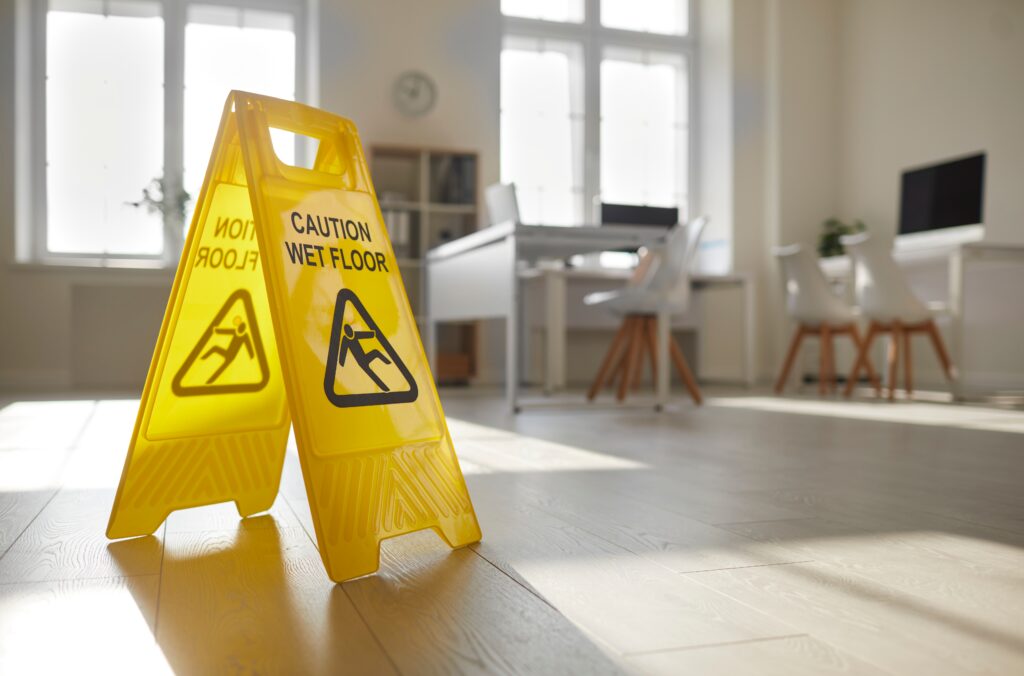
A slip and fall does not automatically mean a property owner or business was negligent. In a Maryland premises liability claim, the injured person generally needs evidence showing that a dangerous condition existed, the defendant owed a duty under the circumstances, the defendant knew or should have known about the hazard or was responsible for creating it, and the condition caused an injury.
These cases often turn on details that can disappear quickly, including how long a spill was present, whether anyone complained about it, what the lighting was like, and whether surveillance footage exists. For that reason, speaking with experienced Maryland slip and fall lawyers early can help preserve evidence and clarify what must be proved.
Identify The Dangerous Condition Precisely
A strong slip and fall investigation starts by identifying exactly what caused the fall. Saying that “the floor was unsafe” is less useful than documenting that there was a puddle of clear liquid near a refrigerated case, an icy patch at a building entrance, a loose floor mat, broken stairs, poor lighting, uneven pavement, or debris in a walkway.
The specific condition matters because premises liability is not based simply on the fact that someone was injured. A Maryland premises liability claim generally requires proof connecting a particular hazard to the property owner’s or another responsible party’s conduct.
That is why Maryland premises liability representation often begins with a detailed investigation of the property, the condition, and who was responsible for maintaining the area.
Actual Notice
Actual notice means there is evidence that the property owner, manager, employee, or another responsible party actually knew about the dangerous condition.
That evidence may include prior customer complaints, employee observations, maintenance requests, inspection records, repair work orders, emails, or other documentation showing direct knowledge of the problem.
Constructive Notice
Constructive notice generally focuses on whether the dangerous condition existed long enough, or under circumstances such that, a reasonable inspection should have discovered it.
For example, evidence about how long a liquid was on the floor may matter in a store slip and fall case. Surveillance footage, cleaning schedules, inspection logs, employee testimony, and witness observations may help answer that question.
Constructive notice is not presumed simply because a hazard existed. Attorneys researching these issues may consult the Maryland appellate opinions database for decisions addressing premises liability, notice, and related defenses.
When The Defendant Created The Hazard
The notice analysis may look different when there is evidence that the defendant or its employee created the dangerous condition.
For example, if an employee left debris in an aisle, created a wet floor during cleaning, or placed an object where customers were likely to trip, evidence about how the hazard arose may be especially important.
Preserve Scene Evidence Before The Property Changes
Slip and fall scenes can change within minutes. A spill can be cleaned, ice can melt, debris can be moved, or a defective area can be repaired before anyone has a chance to document it.
If possible, important evidence may include:
- Photos and video of the exact hazard and surrounding area
- Photos of footwear and clothing
- Names and contact information for witnesses
- A copy or reference number for an incident report
- The exact location of the fall
- Weather conditions when snow, ice, or rain may be relevant
- Requests to preserve surveillance footage
- Inspection, cleaning, and maintenance records
- Receipts or transaction records showing the injured person was present
Preserving this information can be especially important when trying to establish store slip and fall evidence or prove how long a hazard existed.
Expect The Defense To Focus On What The Injured Person Saw And Did
Maryland slip and fall cases can involve significant defenses based on the injured person’s own conduct. The defense may argue that the condition was visible, that warnings were present, that another route was available, or that the injured person failed to act reasonably under the circumstances.
Maryland also follows contributory negligence principles, which can make the injured person’s conduct particularly important. Assumption of risk may also become an issue in some cases.
These defenses do not mean someone should assume they have no case because they did not see a hazard before falling. Visibility, lighting, distractions, warning signs, the layout of the property, and what a reasonable person would have done can all require closer analysis.
Property Type Can Change The Duty And The Evidence
Premises liability can arise in many different settings, and the evidence that matters may depend heavily on the type of property.
A retail store claim may focus on inspection practices, employee observations, and surveillance footage. An apartment case may involve maintenance records, prior tenant complaints, common-area repairs, or landlord responsibilities. Parking lot claims may involve lighting, pavement defects, drainage, snow, or ice.
Falls at workplaces, private homes, and public property can raise additional issues. Claims involving government property may also involve special notice requirements, immunity questions, or shorter deadlines.
Premises cases can also overlap with other legal theories. For example, injuries involving inadequate property security may raise issues associated with negligent security claims.
Connect The Hazard To The Medical Injury
Proving that a dangerous condition existed is only part of a slip and fall case. The injured person must also connect the fall to the medical harm being claimed.
A clear medical timeline can help establish that connection. Relevant documentation may include emergency treatment, diagnostic imaging, specialist appointments, physical therapy, work restrictions, rehabilitation, and recommendations for future care.
Medical records may also help distinguish injuries caused by the fall from prior conditions or unrelated health issues. Keeping copies of treatment records, medical bills, work notes, and related documents can make it easier to present a complete picture of the injury.
For broader guidance after a serious injury, Maryland personal injury representation may involve evaluating medical damages, lost income, future limitations, and other losses tied to the incident.
In the most serious cases, a fall may ultimately result in death. Families facing those circumstances may need to consider separate issues involving wrongful death claims.
Do Not Sign A Release Before The Injury Is Understood
An insurance company may contact an injured person soon after a fall. The insurer may request a statement, medical authorization, records, or a signed release.
It is important to communicate factually, but injured people should understand what they are agreeing to before signing documents or accepting a settlement. A broad medical authorization may provide access to records beyond the immediate injury, while a settlement release can potentially end the claim.
Some injuries also take time to diagnose fully. Symptoms may change, additional imaging may be ordered, or a doctor may recommend longer-term treatment.
A lawyer can review proposed releases and help evaluate whether the medical picture and potential losses are sufficiently understood before a claim is resolved.
Maryland’s General Civil Filing Rule Is Only The Starting Point
Maryland’s general civil statute of limitations provides a three-year limitations period for many civil actions. The text of Maryland’s general civil limitations law, CJP § 5-101 is an important starting point when evaluating the timing of a premises liability claim.
Different rules may apply depending on the defendant, the nature of the claim, disability, death, governmental involvement, or other circumstances. Special notice provisions may also apply in some cases.
People seeking general procedural information about Maryland civil cases can also consult the Maryland Court Help Center’s civil case resources. Those resources are not a substitute for legal advice about a particular premises liability claim.
Ask SBWD Law To Preserve The Evidence And Evaluate The Property Claim
Slip and fall claims can become harder to investigate as time passes. Surveillance footage may be overwritten, conditions may be repaired, and witnesses may become more difficult to locate.
Schlachman, Belsky, Weiner & Davey, P.A. can evaluate the dangerous condition, available notice evidence, potential defenses, and medical record to determine what legal options may be available.
To discuss a Maryland slip and fall or unsafe property injury claim, contact SBWD Law or call (410) 685-2022.
Maryland Slip And Fall Frequently Asked Questions
Can I Have A Claim If There Was No Warning Sign?
Possibly. The absence of a warning sign may be relevant, but it does not decide the case by itself.
A premises liability analysis can also depend on whether the defendant knew or should have known about the hazard, whether the condition was visible, what duty was owed under the circumstances, and whether the dangerous condition actually caused the injury.
What If I Did Not See Exactly What Caused Me To Fall?
Not seeing the hazard before or immediately after a fall does not necessarily end the inquiry, but causation cannot simply be assumed.
Photos, witnesses, surveillance video, incident reports, medical history, and other evidence may help establish what happened. The more precisely the cause of the fall can be identified, the easier it may be to evaluate whether a premises liability claim is supported.
How Long Do I Have To File A Maryland Slip And Fall Case?
Maryland’s general civil limitations rule provides a three-year period for many civil actions, but that should not be treated as the deadline in every case.
Special defendants, governmental notice requirements, death, disability, and other circumstances can affect the timing. Anyone considering a claim should have the applicable deadline reviewed promptly.


