
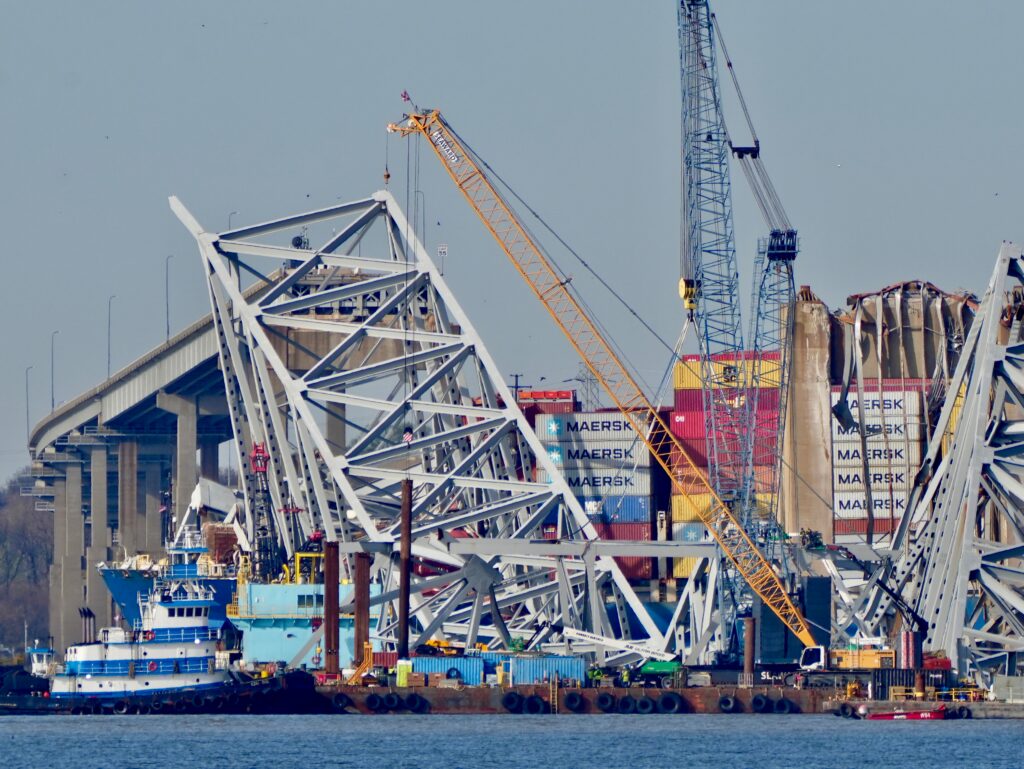
More than a year after the Francis Scott Key Bridge collapsed into the Patapsco River, significant legal developments have brought the tragedy back into focus. Federal criminal charges have been filed against the ship's operators, and Maryland has announced a major settlement resolving the state's claims. For the families of the workers who died, for injured survivors, and for the many others whose lives were upended by what happened on March 26, 2024, these developments raise an important question: what do they mean for individual civil claims?
SBWD Law represents individuals and families harmed by preventable tragedies, including wrongful death and personal injury claims arising from catastrophic events. If you or your family were affected by the Key Bridge collapse, call us at (410) 685-2022 for a free, confidential consultation.
Why the Latest Key Bridge Collapse News Matters
In the early morning hours of March 26, 2024, the container ship M/V Dali lost power and struck one of the support columns of the Francis Scott Key Bridge in Baltimore. The bridge collapsed within seconds. Six construction workers who had been filling potholes on the bridge at the time of the strike were killed. Others were injured, and the closure of the Port of Baltimore created widespread economic disruption that affected port workers, truckers, and businesses throughout the region.
Federal Charges and Allegations Against the Ship Operators
In May 2026, federal prosecutors announced charges against Synergy Marine Pte Ltd., Synergy Maritime Pte Ltd., and the vessel's technical superintendent, Radhakrishnan Karthik Nair. According to the Department of Justice indictment, the charges include allegations of conspiracy, failure to report a hazardous condition, obstruction, false statements, and conduct connected to the deaths of the workers. It is important to note that an indictment contains allegations, not findings of guilt. The defendants are presumed innocent unless and until proven otherwise in court.
Among the key allegations is that the Dali lost power not once but twice in a short span before striking the bridge, and that an improper fuel supply configuration contributed to the second blackout. In plain terms, prosecutors allege that those responsible for the vessel's operation knew about or contributed to a dangerous mechanical situation and failed to address or properly report it before the ship entered one of Baltimore's busiest waterways.
Maryland's Settlement Does Not End Every Claim
Maryland announced a $2.25 billion settlement with Grace Ocean Private Limited and Synergy Marine Pte Ltd., resolving the state's claims against those vessel interests for the cost of debris removal, bridge reconstruction, and related economic harm. The state noted that claims against Hyundai Heavy Industries, which built the Dali decades ago, were not part of the settlement. Victims' families are pursuing their own claims independently.
How Criminal Charges Differ From Personal Injury and Wrongful Death Claims
The criminal case and the civil claims are entirely separate legal proceedings. Criminal charges are brought by the government and seek accountability through fines and imprisonment. Civil claims are brought by injured individuals and families and seek financial compensation for the harm they suffered.
A criminal conviction can strengthen a civil case, but civil claims do not depend on a criminal conviction to succeed. The standard of proof in a civil case is lower, and the parties involved may differ. Maryland's settlement covers the state's losses, not the personal losses of the workers who died, their families, or others individually harmed.
Who May Have a Civil Claim After a Catastrophic Bridge or Maritime Disaster?
Families of Workers Who Lost Their Lives
The six construction workers killed in the collapse left behind families who may have wrongful death and survival action claims. These claims can seek compensation for loss of financial support, loss of companionship, grief and suffering, and the pain the workers endured before death. Maritime law and state law may both apply depending on the specific circumstances of each worker's employment and location at the time of the collapse.
Injured Workers, Drivers, First Responders, and Bystanders
Those who were physically injured as a result of the collapse, including workers who survived, first responders, and anyone else who sustained harm, may have personal injury claims. Workers injured on the job should also understand that workers' compensation may be available alongside or in addition to third-party civil claims.
Port Workers and Others Facing Economic Harm
The closure of the Port of Baltimore created serious economic losses for port workers, longshoremen, truckers, and businesses that depend on the port's operation. Whether economic harm without physical injury supports a recoverable claim depends on the specific facts and applicable law. Speaking with an attorney is the most reliable way to understand whether your losses may be compensable.
Potentially Responsible Parties in a Bridge Collapse Case
One of the defining features of a catastrophic industrial or infrastructure disaster is that multiple parties may share responsibility. In the Key Bridge case, potential civil defendants could include the vessel's operators and management companies, the ship's owner, the manufacturer of the vessel or its components under a product liability theory, contractors or entities responsible for maintenance and inspection, and potentially others whose conduct contributed to the chain of events.
Identifying every responsible party is one of the most important early steps in building a claim that pursues maximum compensation.
Types of Compensation That May Be Available
Depending on the nature and extent of a claimant's losses, recoverable compensation may include:
- Medical expenses and future care costs
- Lost income and reduced earning capacity
- Pain and suffering
- Emotional distress
- Loss of companionship and family relationships
- Funeral and burial expenses in wrongful death cases
- Lost wages and business losses where economic harm is established
Maryland Deadlines and Why Prompt Legal Help Matters
Maryland's statute of limitations for personal injury and wrongful death claims is generally three years from the date of the injury or death. However, certain claims, particularly those involving maritime law or government entities, may carry different or shorter deadlines. Evidence also deteriorates over time, witnesses become harder to locate, and records may be lost or destroyed. The earlier you speak with an attorney, the more options remain available to you.
SBWD Law Is Here for People Harmed by Preventable Tragedies
The Francis Scott Key Bridge collapse was not an act of nature. It was, according to federal prosecutors, the result of decisions and failures by people responsible for a vessel's safe operation. When preventable conduct causes catastrophic harm, those affected deserve to understand their legal rights and have someone fighting on their behalf.
SBWD Law represents Maryland families and workers in serious personal injury, wrongful death, and catastrophic accident cases. If you lost a family member, were injured, or suffered significant losses connected to the Key Bridge collapse, contact us at (410) 685-2022 for a free and confidential consultation.


