
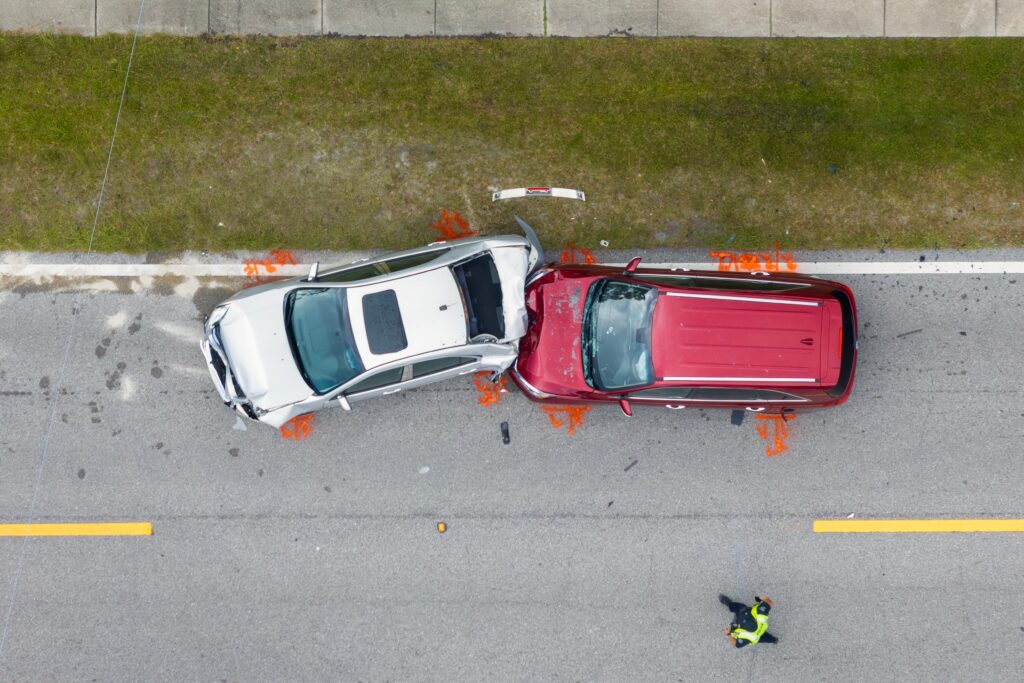
After a serious car accident, one question often decides everything: what actually happened? When drivers, insurers, and witnesses disagree, the answer is rarely obvious. That is where accident reconstruction comes in.
Accident reconstruction is a powerful tool for cutting through conflicting stories and showing, with science, how a crash unfolded. When your memory of the crash is challenged or , the evidence can speak for you. In Maryland, where strict fault rules can make or break a claim, that kind of clarity matters more than almost anywhere else. Here is what accident reconstruction is, how it works, and when it can help your case.
What Is Accident Reconstruction?
Accident reconstruction is the process of using physics, engineering, and physical evidence to determine how a collision occurred. Instead of relying on memory or guesswork, it builds an objective, evidence-based account of the crash.
A qualified expert examines what the accident left behind and works backward to recreate the sequence of events. The result is a detailed analysis of speed, positioning, timing, and cause.
In short, it turns a chaotic, disputed event into a clear, defensible explanation of who did what and when. The same techniques used to investigate serious crashes for law enforcement and federal safety agencies can be applied to prove what happened in your case.
How Does Accident Reconstruction Work?
Reconstruction combines careful evidence collection with scientific analysis. The expert gathers everything available about the crash, then applies established principles to piece the story together.
The stronger the evidence, the more precise the reconstruction. This is one reason acting quickly after a crash matters, since important evidence can disappear fast.
Evidence a Reconstruction Expert Examines
An expert draws on a wide range of physical and documentary evidence, including:
- Skid marks, gouges, and debris patterns on the roadway
- The damage to each vehicle and where it is located
- Data from a vehicle's event data recorder, or "black box," which can capture speed, braking, and other inputs
- Photographs and video, including any traffic or surveillance footage
- The police report, witness statements, and the positions of the vehicles after impact
- Road design, sight lines, weather, and lighting conditions
Each piece is a clue. Together, they let the expert reconstruct the crash with real accuracy.
How Experts Recreate the Crash
Once the evidence is gathered, the expert applies the laws of physics to calculate what happened. Skid marks and vehicle damage can reveal speed. The point and angle of impact can show positioning and right-of-way.
Modern reconstruction often includes computer modeling, scale diagrams, and even animations that illustrate the collision step by step. The finished analysis explains not just what happened, but why, in terms a claims adjuster, judge, or jury can follow.
Can Accident Reconstruction Help Your Car Accident Case?
Yes. In many cases, accident reconstruction is exactly what turns a "he said, she said" dispute into a claim built on solid, objective proof.
Its value is greatest when fault is contested or the stakes are high. Below are the two ways it most often makes a difference.
Proving Fault and Liability
To recover compensation, you generally have to show that another party's negligence caused your injuries. When the other driver denies fault, that can be difficult with testimony alone.
A reconstruction can establish liability with evidence rather than argument. It can demonstrate that the other driver was speeding, ran a light, or was on the wrong side of the road, giving your claim a foundation that is hard to dispute.
This is especially important in Maryland, where even a small share of blame can eliminate your recovery entirely, as explained below.
Countering the Other Side's Version of Events
Insurance companies and defense attorneys often try to shift blame onto the injured person. They may claim you were speeding, distracted, or partly responsible for the crash.
A reconstruction gives you the means to push back. By showing what the physical evidence actually supports, it can dismantle a false narrative before it takes hold and protect you from an unfair reduction in your compensation.
Why Accident Reconstruction Matters So Much in Maryland
Maryland follows one of the strictest fault rules in the country: contributory negligence. Under this rule, an injured person who is found even slightly at fault for a crash can be barred from recovering anything at all.
That makes proving fault the entire ballgame in a Maryland car accident case. If an insurer can pin even one percent of the blame on you, your claim can fail completely, no matter how badly you were hurt.
This is exactly why accident reconstruction can be so valuable here. By using objective evidence to show the other driver was fully responsible and that you were not at fault, a reconstruction can protect your claim from a contributory negligence argument.
When Is Accident Reconstruction Worth It?
Not every fender-bender calls for a full reconstruction. It tends to be most valuable in cases where the outcome truly matters and the facts are in question.
Reconstruction is often worth pursuing when fault is disputed, when injuries are severe or permanent, or when a crash resulted in a fatality. It is also common in complex cases like multi-vehicle pileups or collisions involving commercial trucks. In those situations, the cost is usually small compared to the compensation at stake, and the added proof can dramatically strengthen your position.
An experienced Maryland personal injury attorney can tell you whether your case is one where reconstruction is likely to pay off.
Who Performs an Accident Reconstruction?
Accident reconstruction is a specialized field. The most credible experts often have backgrounds in engineering, physics, or law enforcement, along with specific training in crash analysis.
Their qualifications matter, because a reconstruction is only as persuasive as the person behind it. Many respected reconstructionists hold accreditation from organizations such as the Accreditation Commission for Traffic Accident Reconstruction (ACTAR), which signals a recognized standard of expertise. A well-credentialed expert can withstand scrutiny from the other side and carry real weight with a jury.
A good car accident attorney will have access to trusted reconstruction experts and know when to bring them in.
Contact Our Car Accident Attorneys
If you have been injured in a car accident and the other side is disputing what happened, an accident reconstruction may be the key to proving your case, especially under Maryland's demanding fault rules. The Maryland team at Schlachman, Belsky, Weiner & Davey, P.A. can evaluate your accident, bring in the right experts, and fight for the compensation you deserve.
Contact us or call (410) 685-2022 today for a consultation, and let us help you build the strongest possible case.
Frequently Asked Questions
How soon after a crash should a reconstruction be done?
As early as possible. Physical evidence like skid marks and vehicle damage fades or gets repaired quickly, and data can be lost. Getting an expert involved early helps preserve the evidence a reconstruction depends on.
Do I need a reconstruction for every car accident claim?
No. Minor accidents with clear fault usually do not require one. Reconstruction is most useful when fault is disputed, injuries are serious, or the case is otherwise complex.
Can an accident reconstruction be used in court?
Yes. A qualified expert can present their findings and testify, and reconstruction evidence is regularly used to help establish fault at trial. It can also strengthen your position in settlement negotiations.
Who pays for the accident reconstruction?
When you work with a personal injury attorney, the firm often advances the cost of experts as part of building your case. Your attorney can explain how that works in your specific situation.
How long do I have to file a car accident claim in Maryland?
Maryland sets a limited window to file a personal injury lawsuit, and missing it can bar your claim for good. Because the exact deadline depends on your circumstances, you should speak with an attorney promptly. You can find general court information through the Maryland Judiciary system.


